Reflections on Classical, Christian Education: An Interview with Gordon Zubrod

What kind of impact can a classical education have on a person’s life? We recently asked Gordon Zubrod to share his thoughts about how his own classical education served him through his life as a Captain in the Marine Corps and federal prosecutor. As the grandparent of three Covenant alumni, as well as the father-in-law of Covenant’s founding Headmaster, Mr. Zubrod has seen firsthand the impact that a Covenant education can have on students.

Tell us about your educational background.

My undergraduate degree was taken at Coe College in Cedar Rapids, Iowa.  I received a Bachelor of Arts in English Literature with a minor in political science.  I took my law degree at the University of Maryland School of Law and later graduated from the Naval Justice School in Newport, Rhode Island, qualifying me as a Judge Advocate General in the U.S. Marines.

What (and who) were some of the formative influences on your life?

Key formative influences include, first and foremost, coming to faith in Jesus Christ.  I slowly went from a self-absorbed scholar-athlete-reprobate to a simple believer who realized that God had given me a mind and that I should be brave enough to use it in his service.

Second was/is my wife, who showed me what grace looked like at ground level:  humble, kind, persevering and ready for laughter.

Third was my father, who read great literature to me from childhood (the Iliad and the Odyssey, Robert Louis Stevenson’s adventures, Kon Tiki, Two Year Before the Mast, countless poems).  He even sang.  He was called the Father of Cancer Chemotherapy, responsible for developing numerous drugs that retarded or destroyed cancer cells.  His faith informed everything that he did.  He was offered the Deanship of Georgetown Medical School and Chief of Research for a major drug company after he left federal government (he was chief of scientific research at the National Cancer Institute), choosing instead to work with Haitian refugees in Miami, many of whom were suffering from AIDS.  As a marine biologist (his other career), he taught me the Latin names of fish that were being studied at the laboratory in Maine where we spent our summers.  When I would correctly identify a species as “squalus acanthius” or “lophius piscatorius” he would bestow his ultimate commendation:  “Good show, old man.”  By the way, Dad told me that his most significant training for medicine was Latin and Greek, which taught him the mental structure to see the essential “grammar and logic” of cell structures and of the diseases that attacked those cells.

I should add my long-suffering mother, who made me recite poetry and the rules of grammar to her each night as she prepared dinner and who persevered in prayer for me during the lost years.

The Marine Corps was an astringent application of discipline and method.  I learned structure, chain of command, to take on large responsibilities and develop a bias for aggressive action regardless of the odds against me.  They also required us to take the most difficult tasks (including examinations) when we had gone weeks without adequate sleep, food or preparation.  The key was to find out who could perform best when he felt he had nothing left.  It left a strong impression to this day, having become the habits of a lifetime.

I was greatly influenced by the Benedictine monks, who taught me for four years as a teenager (at St. Anselm’s Abbey in Washington, D.C.).  I became what my daughter refers to as a “grammar Nazi.”  They made us read difficult texts, including Caesar’s Gallic Wars, Virgil’s Aeneid and other Great Books.  Mostly, I was struck, not only by how learned they were, but how reflective and thoughtful they were.  Indeed, my wife and I still speak French to each other when the topic is sensitive and the grandchildren are around.

Finally, a very great influence was books.  My mother, during the summer months, required us to read for two hours every day after lunch.  Four of the five of us (the fifth was way too young) would climb into the same giant hammock and read each day.  I read my way through the children’s and the young adult sections of the library in Bar Harbor, then walked into the adult section and discovered mysteries, which directed my career choices.  A near disaster occurred when I asked my mother what a “lingerry” was.  When, after making me spell it and discovering that the word was “lingerie,” she began to censor my reading choices.  That incident led me to look up words for myself in the dictionary.  I am still a bookworm, and still looking up words on my own. 

How did your classical education impact you? 

Classical education affected my life as a Marine and as a Federal prosecutor in a number of ways.  I learned to read texts (orders, battle plans, statements, case law and facts) very carefully, to ask pointed questions based upon my reading of the facts and the law and to disagree with particularity and force when I thought a superior was wrong.  I learned that huge issues and contests are usually decided on very small facts, minute details and to be the most versed on these facts going into any conflict or debate.

My classical education also trained me in the art of persuasion, to find le mot juste to deploy with skeptical agencies, autocratic superiors, aloof judges and in negotiating with brilliant opponents.  Once, a barrister from Canada wrote me a letter about my position.  He quoted Swift:  “It is a wonderful thing to be a giant, but a terrible thing to act like one.”  (Gulliver’s Travels).  After laying out the ruin caused by his client to innocent people, my closing response was borrowed from Pepys:  “A scoundrel’s back should taste the lash.”  Great fun.  Moreover, throughout my career, I have done the essential writing in every case that I have handled.  Others may tweak the draft, but the essential text is mine.  Having written the core documents, I was also the most informed and best prepared to try the case.  It was a telling advantage.

Finally, in the legal profession, I came across numerous men and women who had a similar love for the law as a profession and were engaged in a life-long pursuit of self-education.  They were well read in history, literature, philosophy and, of course, the law.  In the midst of conflict and strife, they would reach back for a classic quote (e.g., “Once more into the breach…or else fill up the wall with our English dead.”).

You recently taught Covenant’s first ever Moot Court elective along with U.S. attorney, and Covenant parent, Stephen Cerutti. What are some of your observations? 

Steve and I approached the course with some foreboding, not knowing how well the students would grasp complex Constitutional issues, rules of evidence, how well they would be able to handle oral argument and the think-on-your-feet give and take of the courtroom. We needn’t have worried. They were very sharp and, for the most part, took the course very seriously. Of course, some were superior and their preparation made them stand out when they rose to present their case to the Court. As a teacher, I found that the greatest quality of the students, in addition to their ability to grasp complex ideas, was their intellectual curiosity. I was continually challenged on the justice or logic of a particular Supreme Court ruling. The debates would rage between students on a particular issue or legal precept, with each combatant clearly expressing his/her position. Again, for the most part, they were not afraid of work, which included weekends and after-school hours. They wanted to get it right.

Were your goals for the course achieved?

On the positive side, the students rose to a high standard. As one expressed it in a letter written after the trimmest had ended, she had not realized how hard it was to become competent in a profession and how thrilling it was to find herself moving toward it after much effort. Several students said that the experience whetted their appetite for law and were considering pursuing a professional degree.

On the negative side, I think that we should have allowed more time for oral argument during the semester, but were hindered in doing so by the volume of information that had to be absorbed in order for the students to competently argue their cases in Federal court.

What advice would you give to parents considering coming to (or staying at) Covenant?

As the grandfather of three alumni of Covenant, I can personally testify to the performance of the school’s graduates in college and grad school. Zoe graduated summa cum laude from both Grove City (BA) and Villanova (MA). Noah, who will be entering his senior year, is carrying a 4.0 average in philosophy and is heading to Oxford to study philosophy and then to Italy to study Latin for a year.  Moreover, their former classmates have experienced similar success in college. I was talking to a graduate of Covenant last Sunday. He told me that his college classmates were terrified of having to prepare a 5-minute presentation in Speech class. He stated that he had done it so frequently that he didn’t even break a sweat in his presentation, which was head and shoulders above the other speeches.

I’m not certain of the precise makeup of the final years at Covenant, but I am aware of the Senior Thesis and I  presume that there is greater freedom in the final years to experience the professions. If not, I would include visitors from the professions, chosen for their ability to communicate the particulars of professional practice. This would include college professors to alert students what to expect when they get to college. Perhaps, visits to a medical school, a college class or a business (such as Classical Academic Press) would add to their experience as a Covenant student. I also think that debating, public speaking or dramatic readings of plays and even acting out parts of plays should be a requirement of the rhetoric phase (in college, we used to get together with some of our professors and read portions of plays, always the high point of the week).

In any case, those are the things that I would offer to parents, namely, that an upperclassman at Covenant gets to do things that most people experience only (and even then, rarely) in college.  In other words, the school is not just about getting the necessary number of courses to graduate, but to experience the love of learning, becoming a lifelong learner along the way.

Thank you, Mr. Zubrod, for sharing your thoughts with us! 

Gordon Zubrod giving Covenant’s 2016 Commencement Address.

Welcome Andrew Ferris – Covenant’s New Math and Science Teacher

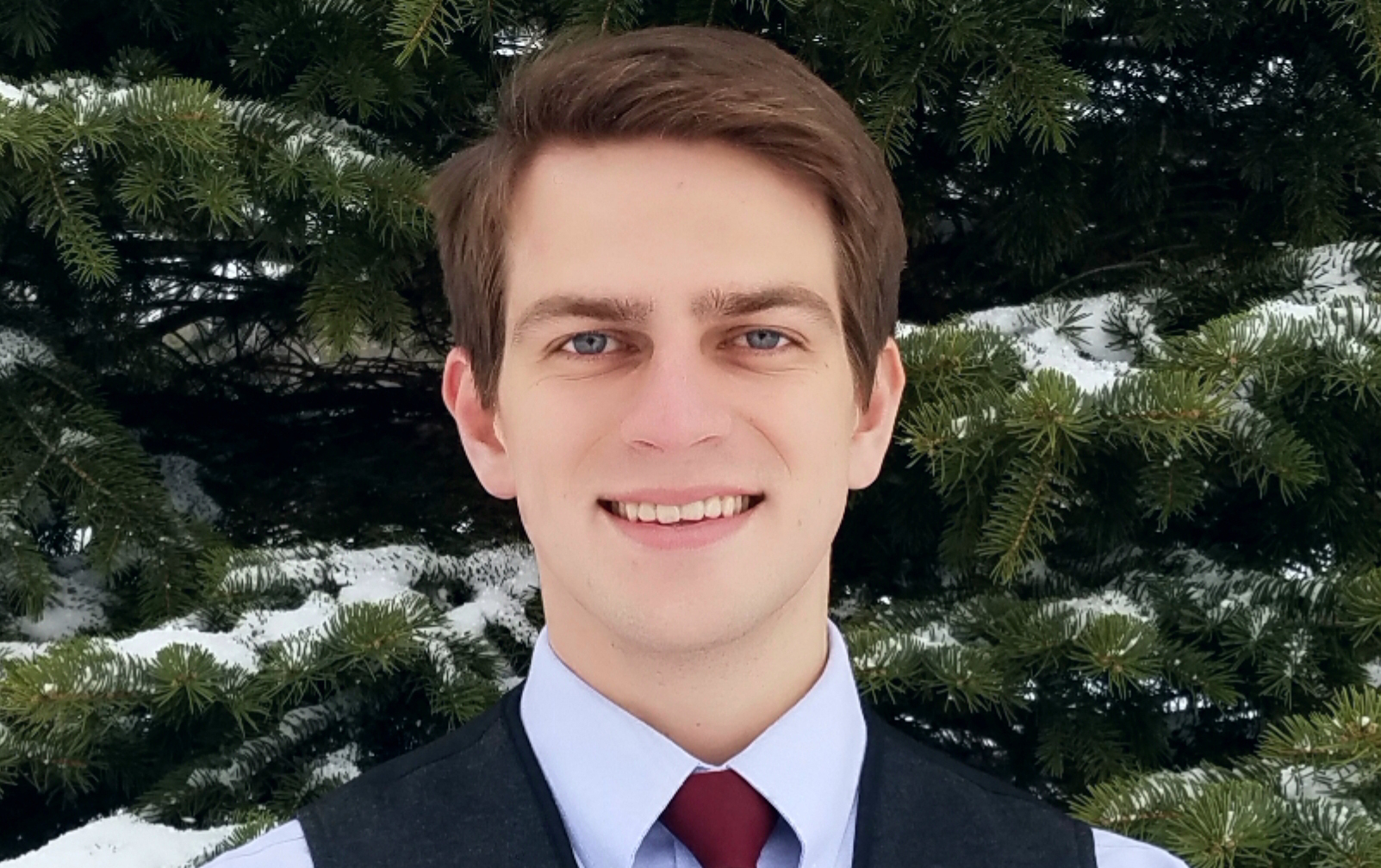
Covenant recently hired Andrew Ferris as a new math and science teacher for 2018-19. Andrew will be teaching our grammar school science classes as well as Life Science and math in the upper school. He is also well equipped to teach an upper level math or science elective as the need arises. We are blessed that Mr. Ferris is able to spend the month of May at Covenant so that he can begin to get to know students and families in our community and to prepare for teaching this fall. 

Tell us about your family? Where did you grow up? 

I am the middle of three boys. I grew up with my parents and brothers in Chardon, Ohio, which is famous for its excessive snowfall and maple syrup industry.

Where did you go to college? What did you study? 

I attended Grove City College. I majored in Biology, with a minor in Mathematics.

What are one or two books you’ve read this last year? What did you learn? 

Most recently, I finished reading The Weight of Glory and Other Addresses, which is a compilation of several addresses given by C.S. Lewis. Lewis’s works consistently deepen my longing for God and point me to the understanding that every desire of man can find ultimate satisfaction in God.

I also recently finished reading Every Good Endeavor by Timothy Keller. This book helped me better understand how we as Christians ought to approach our work, and how work is one of the ways that man can glorify God and be His image-bearer.

What have you been doing since you graduated from college? 

Since graduating in December 2016, I have been working in the Bioanalytical Chemistry department at Concord Biosciences. I work in the laboratory, performing experiments on drug compounds that are in various stages of development.

How do you think your experience as a scientist will impact your teaching? 

I think that my experience as a scientist gives me a more in-depth scientific knowledge, especially in the fields of biology and chemistry, and has enabled me to see first-hand how the ideas that I learned when I was in school are applied in real laboratories. This allows me to teach from experience, not merely from head-knowledge.

Also, the laboratory is a diverse workplace, made up of very different people from all over the world who have very different worldviews and values. This is very useful in understanding how different worldviews approach science, and the implications and consequences of the various mindsets. This will help me to point my students toward a proper understanding of science, which I believe will serve to increase both their knowledge and their joy in science.

Who have been some of the biggest influences on your thinking – either in person or through books? 

Two professors from Grove City College immediately come to mind: Dr. Paul Munson and Dr. Julie Möller. The lessons from both of these professors, whether inside or outside the classroom, are saturated with God’s truth, ever pointing me to the Source of all wisdom. Additionally, I very much enjoy reading and learning from the works of C.S. Lewis. 

What do you most want young grammar school students to learn through your science classes? 

I want the young grammar school students to learn how God has given us such a good and glorious creation, by which we can praise Him. I want the study of Creation to fill them with an awe for God and a desire to continue learning more and more about it.

What are you excited about when you think about teaching upper school students at Covenant?

I am excited for the opportunity to help the upper school students get glimpses of God’s glory through the studies of math and science. I am excited to help my students understand how we as Christians ought to approach the fields of math and science, regardless of the career paths they pursue. I hope that through their studies they would not only be knowledgeable but also have a lifelong appreciation of the beauty and purpose that God has infused into His creation.

What do you like to do when you’re not teaching? 

I enjoy partaking in good conversations, playing piano and French horn, composing music, fishing, making and throwing boomerangs, kayaking, hiking, ballroom dancing, playing volleyball, playing chess, making maple syrup and gardening.

Behind the Scenes

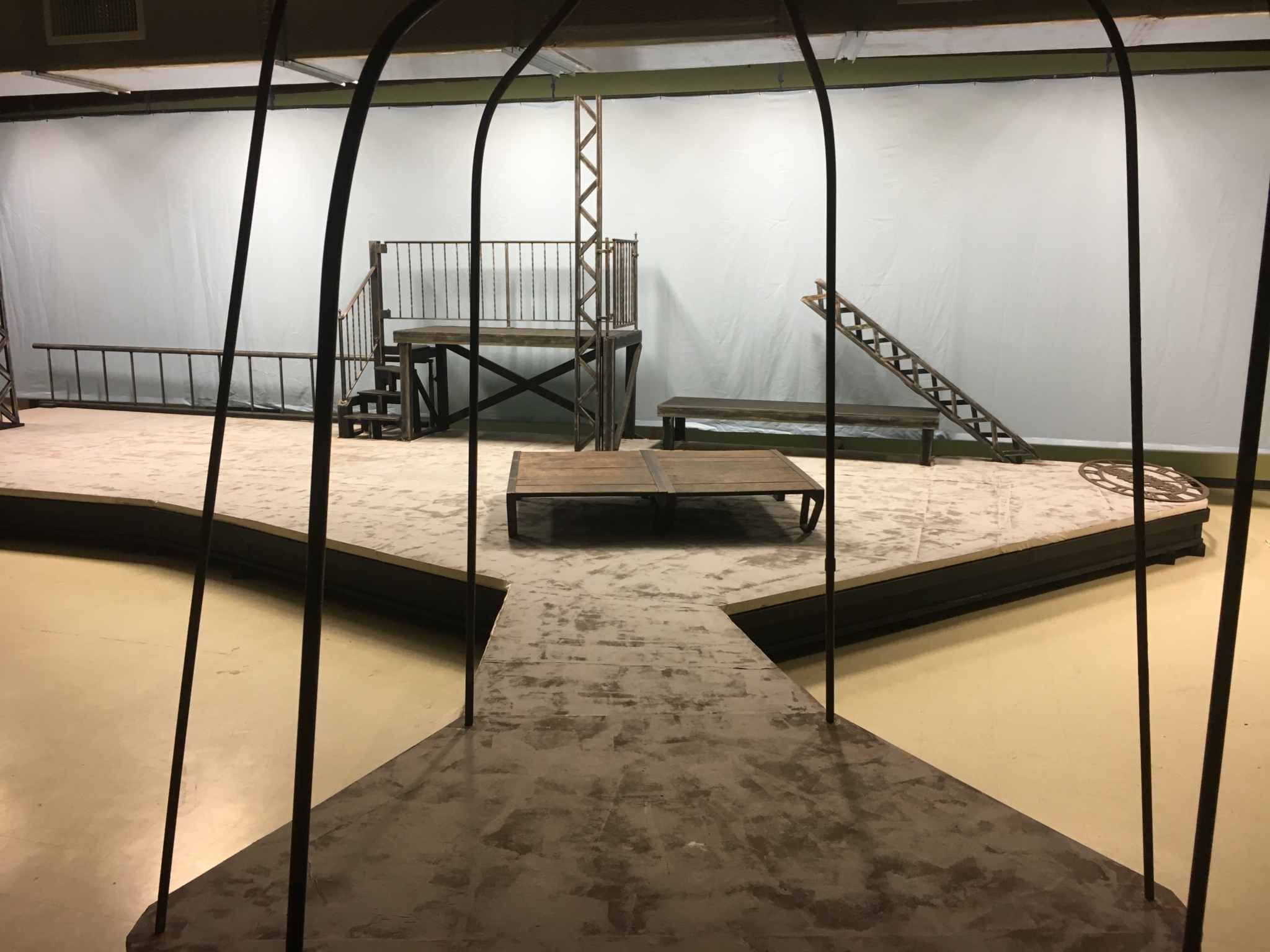
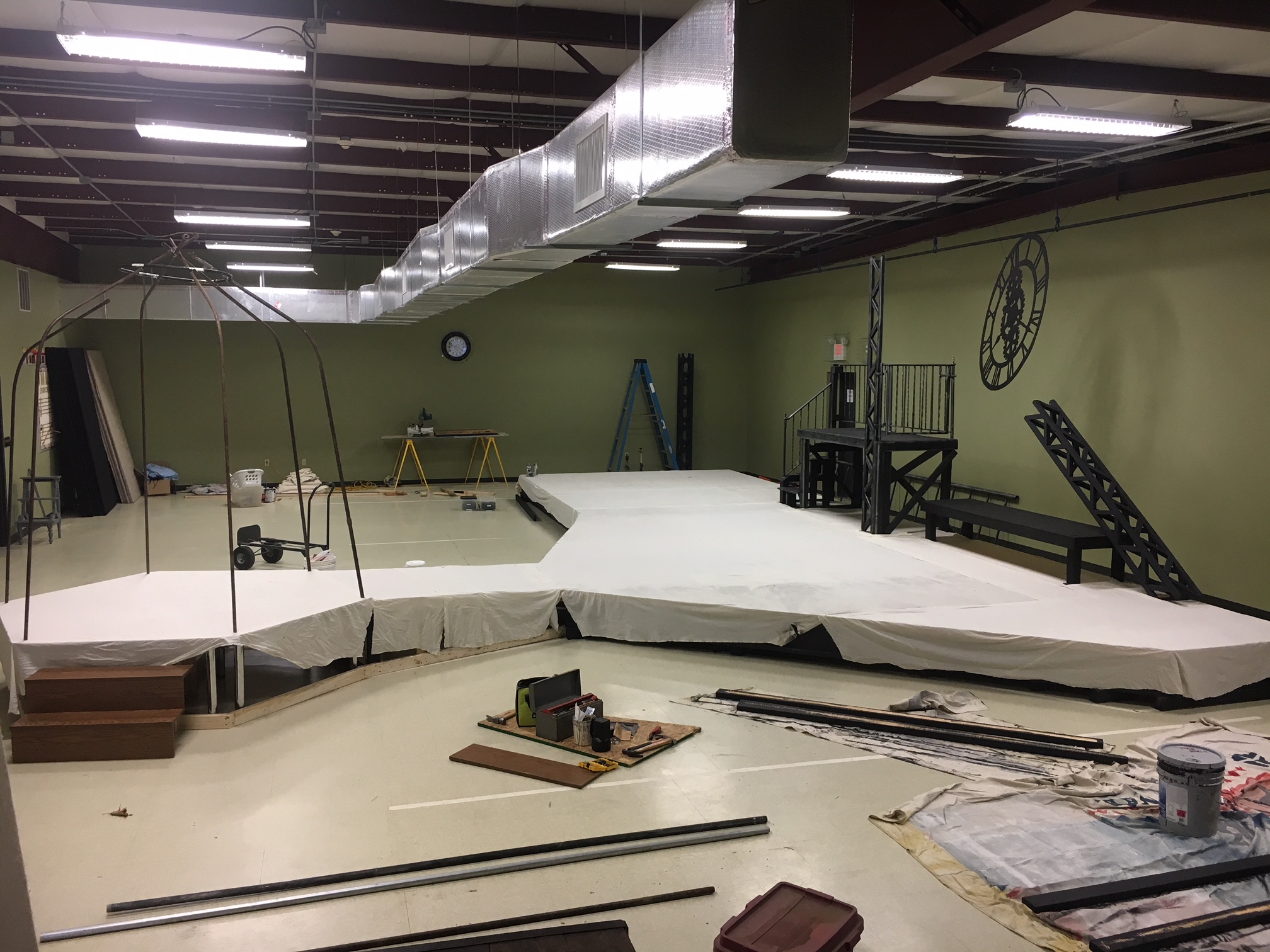
While many of our families were enjoying spring break by relaxing, traveling, and resting, one of Covenant’s faculty members – David Kemper – along with a cohort of student and parent helpers, was busy performing one of the biggest annual transformations that Covenant experiences: the building of the set for our drama production.

Mr. Kemper teaches history, literature, and rhetoric, and serves as Covenant’s lead teacher of classical pedagogy. He is also the Director of our drama production. He and his team of helpers built a gorgeous set for this year’s production of Romeo and Juliet – working over spring break every day except Sunday, from morning to night, to get it done. The play promises to be excellent – so buy your ticket and come and join us for one of the shows beginning on April 19.

We recently asked Mr. Kemper to provide some insight into his Director role.

How long have you been directing plays at Covenant?

This is my fourth year directing plays at Covenant.

What are the shows that you have directed or been involved in?

Hamlet was the first play I directed, then Arsenic and Old Lace, The Imaginary Invalid, and now Romeo and Juliet. Before that, I’ve been involved with most of the plays in some role or another. My first set design and construction was Antigone performed in the Parmers’ home theater in 2004. Since then I’ve designed a few sets and mentored student directors from Messiah College who came in to work with our students.

Why did you choose to do Romeo & Juliet this year?

Selecting Romeo and Juliet as this year’s play was a group effort. We have a tradition of performing a Shakespeare play every few years, and I think Mr. Hayward suggested it might be time again to do a drama. I settled on Romeo and Juliet, pitched it to students, faculty and administration and it stuck.

Do you have a favorite line or lines from this play?

My favorite line so far is Friar Laurence’s wise observation spoken to Romeo:
“What early tongue so sweet saluteth me?
Young son, it argues a distemper’d head
So soon to bid good morrow to thy bed.
Care keeps his watch in every old man’s eye,
And where Care lodges, Sleep will never lie;
But where unbruisèd youth with unstuff’d brain
Doth couch his limbs, there golden sleep doth reign…”

Aside from the characters, what are other roles that students perform to make a drama production?

I try to involve students in most of the stages of production. From creative vision to acting coaching/direction to set construction and costume design/acquisition, facility management, lighting looks, sound vision, make-up concepts, prop management, actor support, audience care, … really just about every part of what it takes to give a community a full and successful performance.


How did you come up with the idea for the set?

My favorite sets have been the more abstract sets I’ve seen… ones that communicate a theme or inspiration from the script, but that don’t explicitly describe this or that scene. In Romeo and Juliet, the script calls for a balcony. It calls for a bed, a burial chamber. I think a good designer can think of ways to make pieces of the set become all sorts of different items based on how they’re used. That way there doesn’t need to be scene changes with various painted back-drops to tell the audience where they are. This can be done more abstractly with minimal set cues and lighting and audio. Our balcony is the remnant of a broken clock tower. Shakespeare has something to say about time improperly managed as a tertiary theme beneath love and vengeance. The idea is to engage the audience in a way that leaves space for their minds to fully imagine that what they are seeing is really happening in front of them. Tell them too much, and they feel separate from the art. Tell them just enough, and they feel like a part of it.


Who helped you build it?

The construction of the set takes a lot of help. From materials, donations/purchases, and trucks/trailers to haul those materials, to hands to carry and cut and assemble, again, every volunteer, student, and parent is a valued contributor!

What are some of the things that you’ve seen students learn from being a part of a drama production?

By participating in the play, whether acting or in some of the other ways mentioned above, students learn to value interdependence. Not only do they experience the feelings of triumph after a great performance (a valuable sensation). Students become emotionally linked to one another. I suppose it’s similar to students who work hard together on the soccer field. In team sports, success isn’t determined by one player. I think this is also true for a successful theatrical performance. The lead actors might have more lines, but if the lights don’t come up, who would see them delivered? If the supporting cast member doesn’t cue their entrance by carrying the right prop, how would a sword fight commence? Students learn to depend on each other in sometimes challenging but achievable ways. They really can count on their cast mates and technical crew and directors.

Take us through what all goes into this. When do you select the play? What work do you do to the script? When do auditions occur? Who are some of your non-student helpers? How often are rehearsals?

After the play is selected I do multiple reads of the script taking into account my pool of actors, facility strengths, the sensitivities of our diverse audience, and then begin to edit/alter/shape the script in small ways. This is necessary with Shakespeare since there are just some lines that are too bawdy for our student-actors and our audience. We then schedule the auditions depending on what kind of work I think actors will need to put into memorizing their lines. This theater season, we held auditions before Christmas, to ensure that leads would have a script in their hands over break. During this time, a production team of a couple parents and faculty begin emailing back and forth generating ideas, schedules, and parent volunteers and more schedules and timelines. Without the help of Erica Bryce, Val McClymont, and Teresa Lanza very little of this year’s production would have come together. It really is just too much for one person to carry. Having a strong team of passionate and driven friends is essential for our dramas to come together. I’m so thankful for these ladies and their committed involvement. I develop a schedule by splitting the script into manageable pieces and trying to take into account any schedule conflicts. We like to start rehearsals after basketball season is over for example, and sometimes I’m able to accommodate work schedules or family activities for students who request flexibility. All that considered we do try to rehearse every day up till the performances… except for Easter break and most weekends.


That sounds like a lot of work…

Well, it is a lot of work… and I reevaluate if I’m able to commit to all of it every year. Again, without the team that crowds around me to support and manage so much of the process, it just wouldn’t happen. There are so many that I don’t have room to mention, but aren’t valued or loved any less than those I have.

Do you sleep well at night?

I sleep just fine, I guess… I’m smiling as I write this. The thing is, I might sleep more restfully if I worked from lists, but I don’t. I can recount stories of how I awake from a dream in the early morning hours with solutions to one or more of the problems I hadn’t yet thought out. Or sometimes I dream in a particular character’s point of view, as I work out motivations or movements to better direct the student actors. But yeah, I sleep.


How do you recover when it’s all over?

The process of taking it all apart when it’s over is a cathartic way to recover from the process of building it all. That is, partaking in conversations afterwards, hearing how the play impacted viewers, hearing how the actors have moved back into normal schedules and where their heads are, physically demoing the set, trying to return all the props and set pieces and costumes that were loaned to us or rented… in a sense just returning to normalcy and a satisfied rest, like returning home after a strenuous hike. I remember the vistas, and the taste of the streams, and in all seriousness, sometimes I weep.

In your opinion, how does the theater enhance a student’s education?

Theater is just one of the many ways a student is best educated. It is frivolous. It is pretend. But it is also essential and real. Theater might only be an echo of reality in terms of actors and characters and pretend spaces, but theater directs a student toward discovery in a way that offers new insights on the world and people around them. Theater is simply literature for the stage, bringing life to old words, old themes. When young people do theater, old things become new… for them, and for us.

Conversation with Dr. David Sonju

Alumni Spotlight | Daniel Schwab

Alumni Spotlight | Allie Good

Alumni Spotlight | Ben Brown

Andrew Peterson and the Christian Imagination

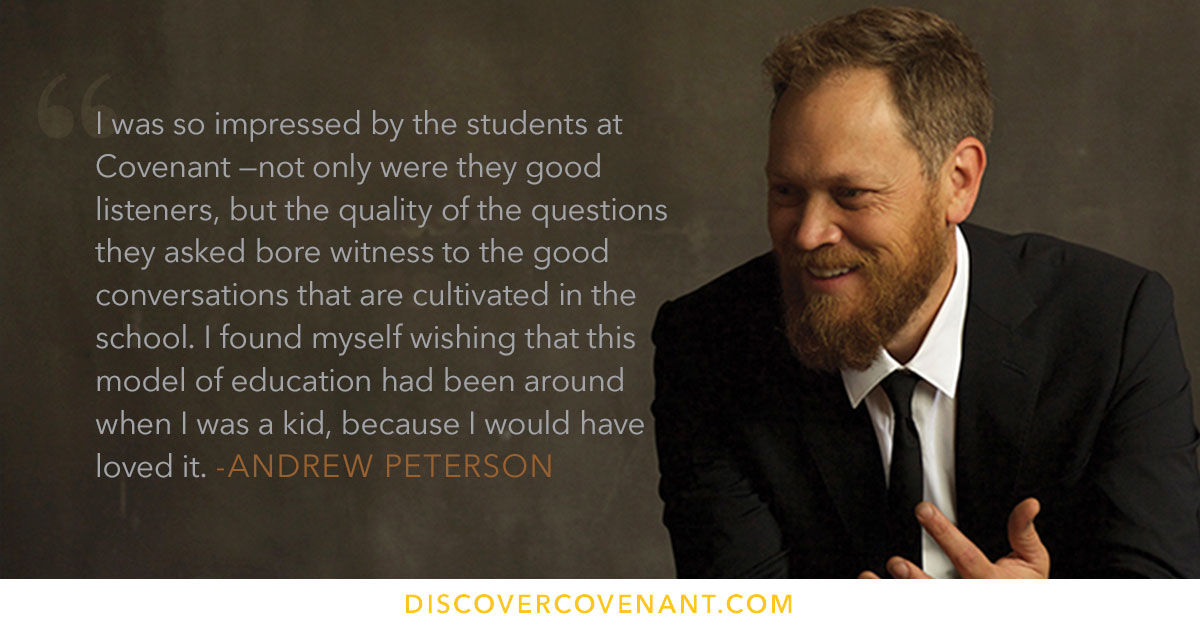
In May of 2016 Covenant students enjoyed a visit from accomplished singer, songwriter, and author Andrew Peterson. While he is best known as a successful recording artist, Mr. Peterson has also won acclaim for his literary debut, a four-volume adventure epic called The Wingfeather Saga. (Click here for a great review of these books from Covenant’s former humanities teacher, Dr. Hunter). Peterson’s music and books bear evidence of a deeply Christian imagination reckoning with the world God made. He has also cultivated a community of storytellers and artists who come together at a place called The Rabbit Room to talk about and create art that is true and good and beautiful.

Mr. Peterson gave two excellent talks to our students during his visit. Covenant’s Head of School recently came across one of these recordings in his iTunes library. Remembering what excellent talks Peterson gave on the adventure of reading and on the formation of a Christian imagination, we thought parents and students would be blessed to hear them. So, here you go.

The Adventure of Reading (to Grammar School Students)

The Christian Imagination (to Upper School Students)

  • The questions asked from the audience were unfortunately not picked up on the recordings. We have lightly edited the recordings to take out some of the longer gaps and pauses. The listener should understand that Andrew was responding to questions, not simply jumping from topic to topic. 

Conversation with Greg Lowe

At Covenant we believe strongly in the the God-given authority and duty of parents to raise up their children in the Lord. We want to partner well with parents in this task, and we depend upon their wisdom and commitment in the education of their children.

In this conversation, Greg Lowe shares his thoughts reflecting upon his nearly two decades in the Covenant community. Greg and his wife Jennifer have raised four sons – all of whom went Kindergarten through graduation at Covenant. Greg has served in numerous ways at Covenant over the years, heading up the building committee that located and then helped to renovate our current campus, leading as a board member, and coaching varsity basketball.

In this conversation recorded at Classical Academic Press, Greg discusses various facets of Covenant, including their decision to come to Covenant initially, the importance of athletics in classical education, the skill of being able to learn new things, and the distinctive camaraderie they found in Covenant’s community. See the time stamps below to learn more about a specific topic.

  • From Home School to Christian School | 0:00 – 0:51
  • Athletics and Classical Education | 0:52 – 2:59
  • Community and Faculty-Student Interaction | 3:00 – 4:14
  • Cultivation of Thought and Creativity | 4:15 – 8:09


New to Covenant: A Student’s Perspective