
Welcome, Mrs. Cossin!
As we announced a few months ago, we will be welcoming a new Grammar School Dean to Covenant for the 2020-2021 school year. We are pleased to introduce Mrs. Ashley Cossin and hope this short interview helps our community get to know her a little better. We can’t wait for you to meet her in person!
Tell us about your family. How old are your children? What are their interests?
My husband Jim and I have been married for 21 years. We met while we were students at Reformed Theological Seminary in Orlando, Florida. Our oldest child, Cana, is 18. She is a freshman at Patrick Henry College in Purcellville, Virginia. At PHC, she plays on the women’s soccer team and she is a captain of the freshman Mock Trial team. James is fifteen and is currently a sophomore. This year he is involved with speech and debate. He also has experience with robotics and would like to join the robotics team at Covenant. John is 12 and in 7th grade. He plays club soccer, and he looks forward to playing on the Covenant soccer team.
What are some things you enjoy doing outside of work?
Of course I love to spend time with my children and my husband. Activities we enjoy outdoors include camping, hiking, and going to the beach. When relaxing indoors, I love reading, solving crosswords, Sudoku, and putting together a challenging puzzle. Meeting friends for a cup of coffee or a meal is also one of my favorite ways to spend free time.
What is one of the best books you’ve read in the last year?
One book that I found especially encouraging was Treasures of Encouragement by Susan Betters. This book prompts Christians to earnestly ponder how they can encourage others. Susan Betters recounts many personal anecdotes in the book including losing her sixteen year old son. She tells of the important role the members of her church played in supporting her through this difficult time. The book reminds believers of the importance of assisting one another during times of hardship.
Who are one or two people who have really influenced your thinking about education?
Doug Wilson’s book Recovering the Lost Tools of Learning provided my first glimpse into classical Christian education. It is remarkable that Wilson remembered reading an essay by Dorothy Sayers while he attended seminary as he contemplated creating an academically challenging Christian education for his oldest child, Rebekah.
While I was working at Veritas Classical Academy, I had the privilege of hearing his daughter, Rebekah Merkle, speak to our staff. Her insightful answers to both education and social issues revealed the excellent education that she received at the Logos School in Idaho.
What advice would you give to a family just beginning their journey in classical Christian education?
I would encourage them not to worry about their children’s grades for the first few months. The education that Covenant offers may differ greatly from the curriculum that they have used previously. Also, a significant amount of the curriculum used in the grammar school is cumulative. Students entering in the later years of grammar school often require several months to adjust. Lower grades on schoolwork or tests may not reflect the substantial amount of new information that your child has acquired.
For parents of logic and rhetoric students, I would encourage them to talk with their children about their classes. Most parents did not receive a classical education, and we can all glean from the wisdom and insight that our children are receiving in their classes.
What do you think you will miss most about being a classroom teacher?
I will definitely miss the daily interaction with my students. During the school year, teachers get to know the children in their classroom and their families on an extremely personal level. These close relationships with fellow believers was an aspect of teaching that I greatly enjoyed. Although I loved being a classroom teacher, I also look forward to the new challenge of being a full time administrator and the opportunity to work with a larger number of families and students.
What were some of the things you appreciated most about Covenant during your visit in January?
I absolutely loved the two days that I spent at the school in January! I have worked at two smaller classical Christian schools in southern California. While at Covenant, I enjoyed observing an established K-12 classical Christian school with veteran teachers and clearly established policies and procedures. In addition, I loved witnessing the focus upon God and His word. From the scripture verses in the lunch room, singing hymns with the entire student body on Thursday, and singing with the staff on Friday before students arrive, it was apparent that Covenant was a school striving to glorify God during the entire school day. I recognized that Covenant would be an excellent fit for me and for our children.
What excites you most about working at Covenant?
I look forward to having the opportunity to use my classroom and administrative experience to help parents further their children’s education. Classical Christian education offers today’s students an outstanding academic and solidly biblical education, and this makes me excited for the next generation of Christian children. I am thankful to have an opportunity to continue serving the Lord at Covenant Christian Academy.
First Steps Towards Wisdom
Along with Christ-centered academics, the goal of a classical Christian education is to shape the hearts, affections and spiritual lives of our students in a way that is pleasing to the Lord. Stephanie Schwab, one of our two Kindergarten teachers here at Covenant, has graciously answered some questions to help give insight into what guiding the hearts of her students looks like in Kindergarten.
How long have you been teaching kindergarten at Covenant?
I have taught in the kindergarten classroom here at Covenant for seven years.
Apart from academics, how do you cultivate and guide the hearts and spiritual lives of your students?
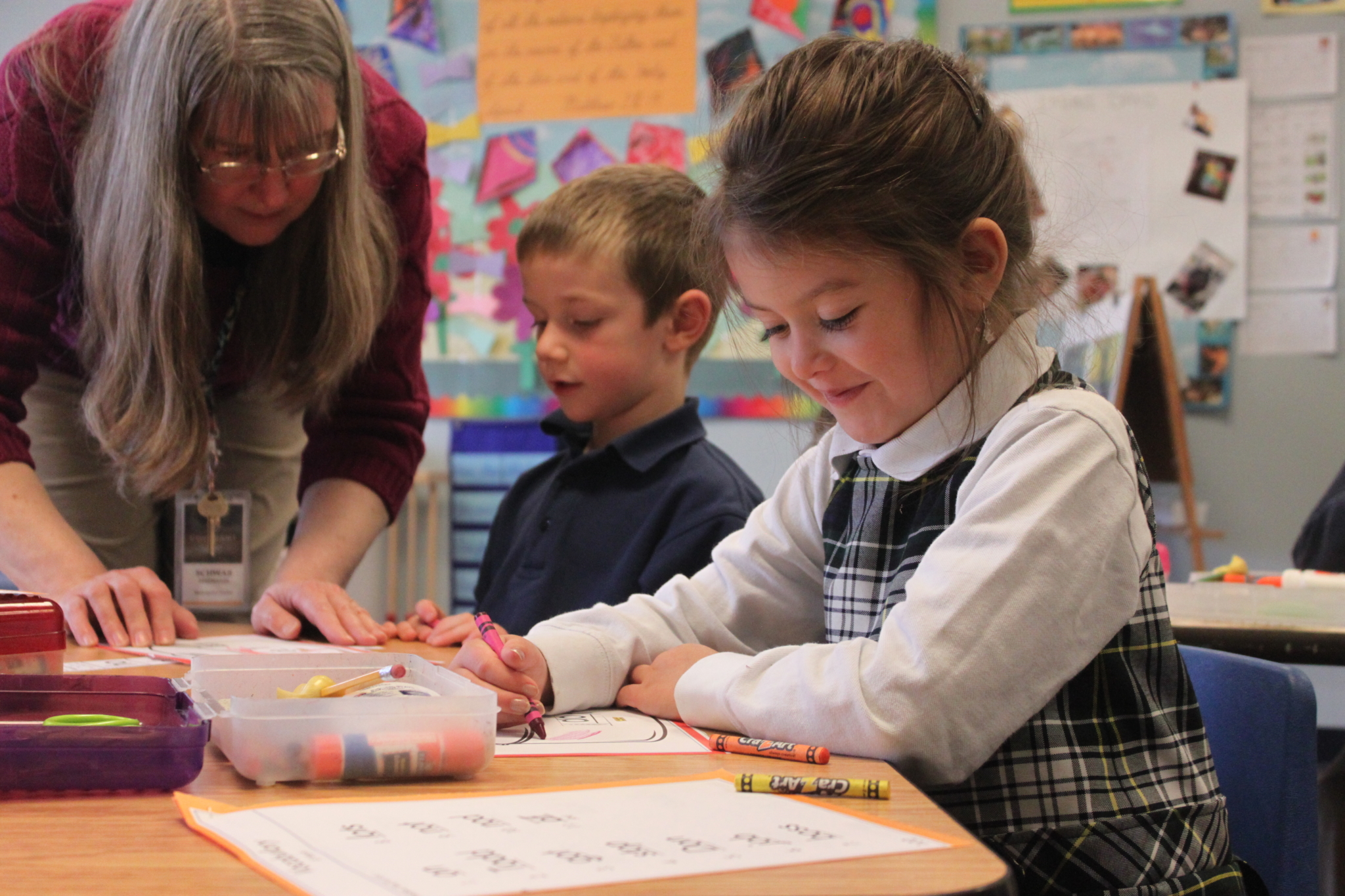
It is a huge privilege to be able to teach right from the source, to guide children to understand and memorize portions of Scripture. Along with learning straight from God’s Word, every day brings an opportunity to learn how to apply what we learn from Him as the children interact with classmates, teachers, and work toward God-honoring attitudes and behaviors. My goal is to partner with the parents to help the students as they begin their journey of loving whatever our Heavenly Father calls Beautiful.
Would you mind sharing with us a story of your kindergarteners taking steps towards growing in wisdom?
At the beginning of the year, a kindergarten girl and boy who rode the same bus found themselves quarreling over who would enter the bus first. As you can imagine, each wanted to be first and devised a game wherein whoever sighted the bus first could choose who enters. After learning the biblical principle of preferring others (in class and at grammar school assemblies), as this truth sank in, the game changed to become, “If I see the bus first, I can choose that YOU go first!” This worked for a while until the young gentleman learned to defer to the young lady. Now they are working on how to graciously accept the gift of going first!
Describe the atmosphere of your classroom.
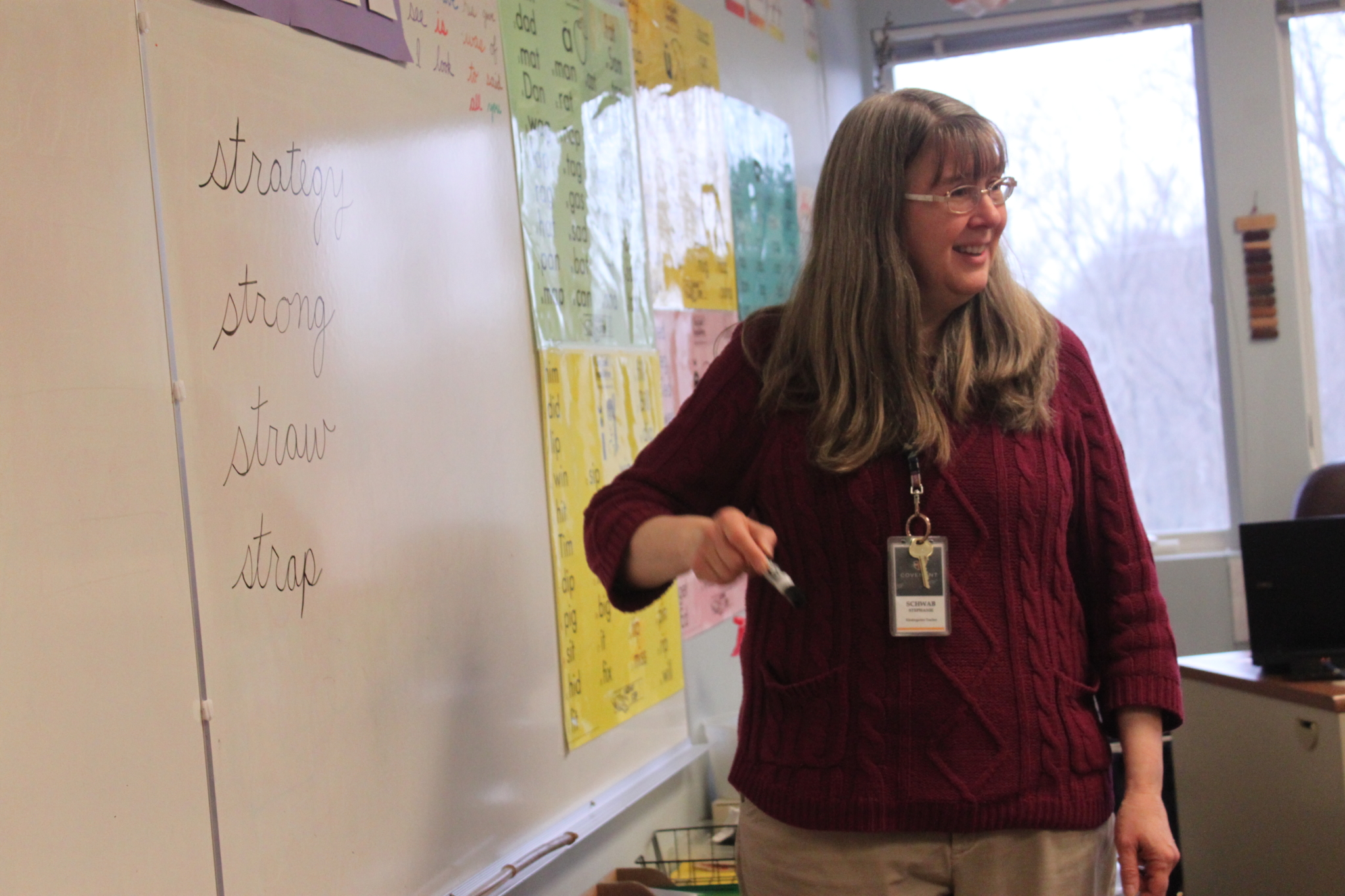
Typically, the kindergarten atmosphere is that of excitement, mixed with lots of energy and joy! In the course of the day, as students learn to relate to one another, strong feelings can flare! One important goal of the year is to give the students tools that they will find helpful in their interpersonal relationships now and throughout their lives to bring peace and resolution into areas of conflict. One example is helping students to walk through restoration with each other, offering meaningful repentance and forgiveness to one another. They learn that they can call on God for help in these areas. During the year the students learn to apply order and personal responsibility to their daily routines, while still maintaining excitement, energy, and joy in their learning.
How have you seen some of the lessons you teach in kindergarten be displayed further on?
I love to watch the children as they participate in Show and Tell and imagine how they will use what they learn when it comes time to present projects later in school and ultimately as they give their senior theses. When I hear these little ones graciously fielding questions about the objects near and dear to their hearts, or for that matter, learning to formulate appropriate questions from the ‘audience’, I see these as first steps toward upper school rhetoric. Even today, a kindergarten child who was sharing was asked about his special treasure and he responded, “That’s a tough question,” then turned to the over-eager group and graciously reminded, “I need time to think about this, put your hands down!” Wouldn’t it be great for more of us to learn that we need to take the time to answer well and to listen to each other!
Thank you, Mrs. Schwab, for your faithfulness in guiding the minds, hearts, and lives of our kindergartners!
For any family interested in joining us on the journey of teaching students to walk towards wisdom, beginning in kindergarten and every step of the way, feel free to visit our kindergarten page: https://discovercovenant.com/kindergarten/ or contact our Director of Admissions, Katie Broeg, at Katie.Broeg@DiscoverCovenant.com.
Science and Math at Covenant
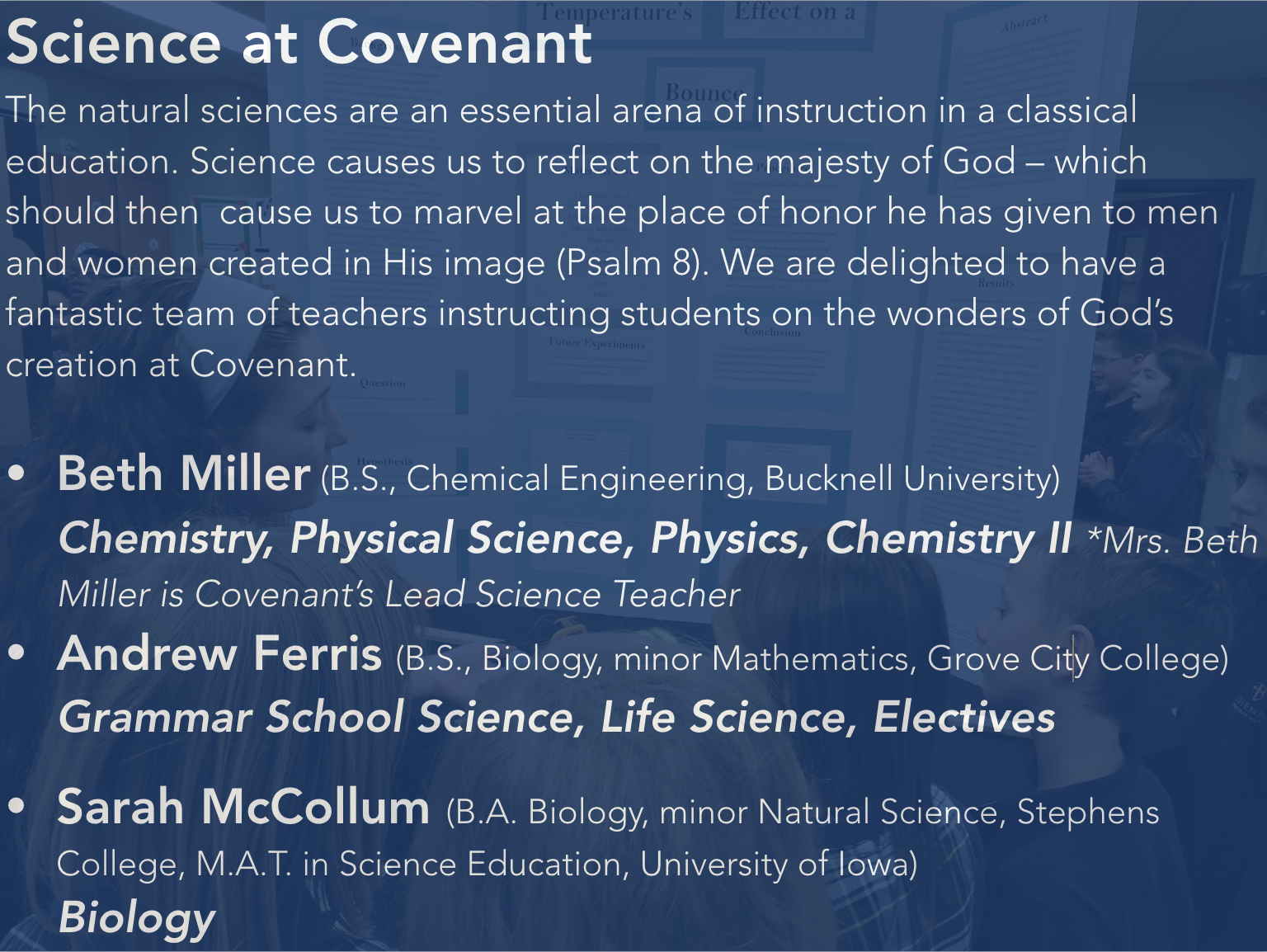
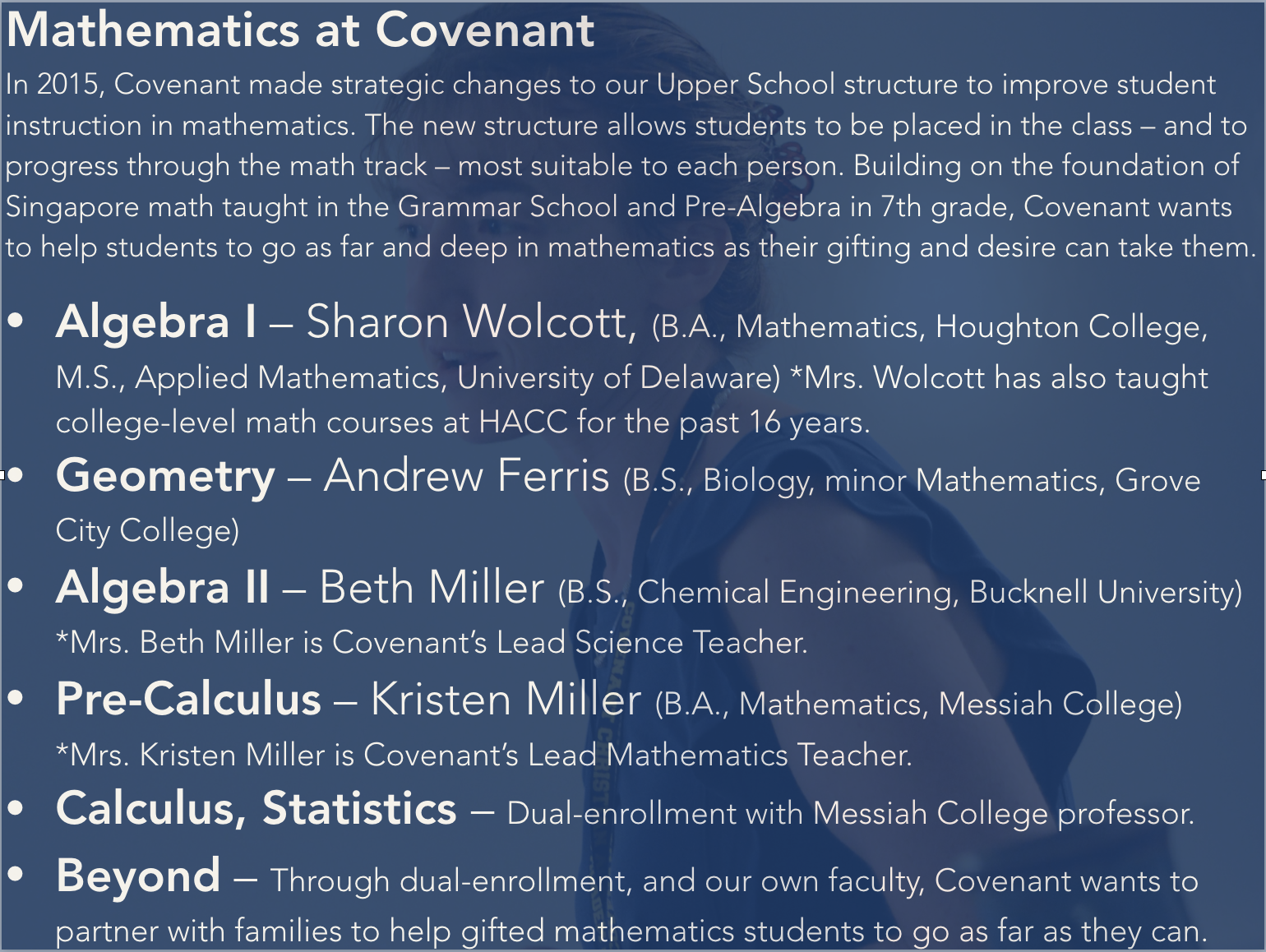
Science and mathematics are essential fields of inquiry and instruction for a classical, Christian course of study. Many of our graduates have gone on to pursue further education and careers in these disciplines in fields such as medicine, computer programming, bio-medical engineering, and more. (See our profiles on Allie Good, Ben Brown, and Daniel Schwab for a few examples).
We are happy to announce two new faculty members who will be teaching math and science classes at Covenant next year. Sarah McCollum will teach Biology and Andrew Ferris will join our team full-time to teach Grammar School Science, Life Science, Geometry, and electives. You can learn more about each of them – as well as our Lead Science Teacher, Beth Miller – by clicking on their names.
Overview of Covenant’s Math and Science Faculty
Over the last few years, we have been blessed to assemble a fabulous team of educators to teach our math and science courses. The following slides provide information about our program and the gifted faculty who will be teaching our students. If you would like to learn more about Covenant, please contact Admissions Director, Katie Broeg, to begin a conversation.
Teens and Social Media
Compiled by John Hayward, Upper School Dean
Would you give a 10 year old a chainsaw? There are likely different answers that people give
depending on their own background and experience. Answers to that question also demand the
response, “Which 10 year old?” Debates could follow but everyone would agree that you don’t
give a powerful and potentially damaging tool to children without giving them warnings and
instructions. Social Media is a tool, and this blog talks about needed wisdom for its use.
Young Teens and Social Media
https://www.ccef.org/resources/blog/young-teens-social-media
Protection and Prudence
Protection and Prudence in a Pornified World
Compiled by John Hayward, Upper School Dean
Our students read the book of Genesis and the Epic of Gilgamesh which demonstrate that there is nothing new about sexual immorality. The Apostle Paul’s letters from the ancient world show us there is nothing new with sexual sin being a problem within the church. These articles are built upon ancient biblical wisdom but apply it to the new aspects of the internet worlds our families need to navigate.
- Protecting Your Home from Porn (Part 1)
http://thestudentoutreach.org/2017/04/24/protecting-home-porn-pt-1/#.WuICL4jwbIV - Protecting Your Home from Porn (Part 2)
http://thestudentoutreach.org/2017/04/27/protecting-home-porn-pt-2/#.WuICoojwbIV - Porn, Smartstuff, and Thoughtfulness
http://thestudentoutreach.org/2017/02/22/porn-smartstuff-and-thoughtfulness/#.WuIEgYjwbIV - Catching Your Child in Sexual Sin (Part 1)
http://thestudentoutreach.org/2015/09/11/what-to-do-when-you-catch-your-child-in-sexual-sin-part-1/#.WuIFCYjwbIV - Catching Your Child in Sexual Sin (Part 2)
http://thestudentoutreach.org/2015/09/11/what-to-do-when-you-catch-your-child-in-sexual-sin-part-2/#.WuIFfIjwbIV
Welcome Sarah McCollum – Covenant’s New Biology Teacher
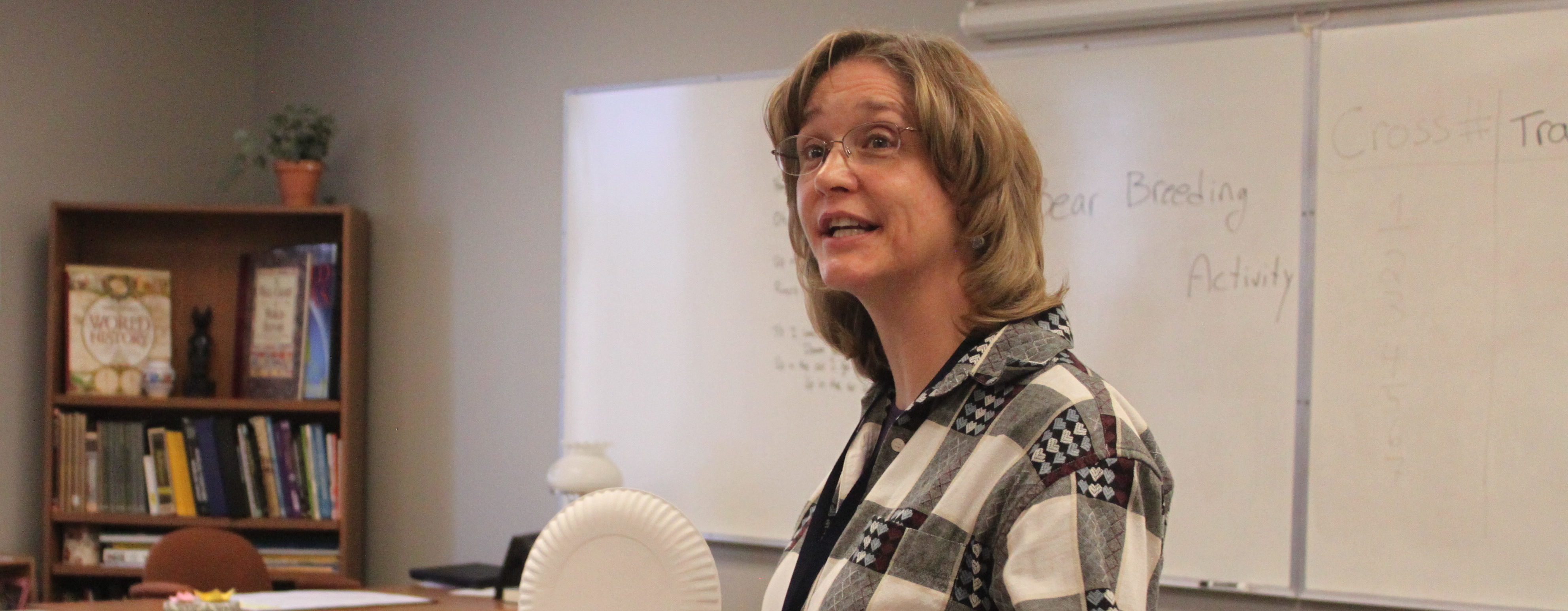
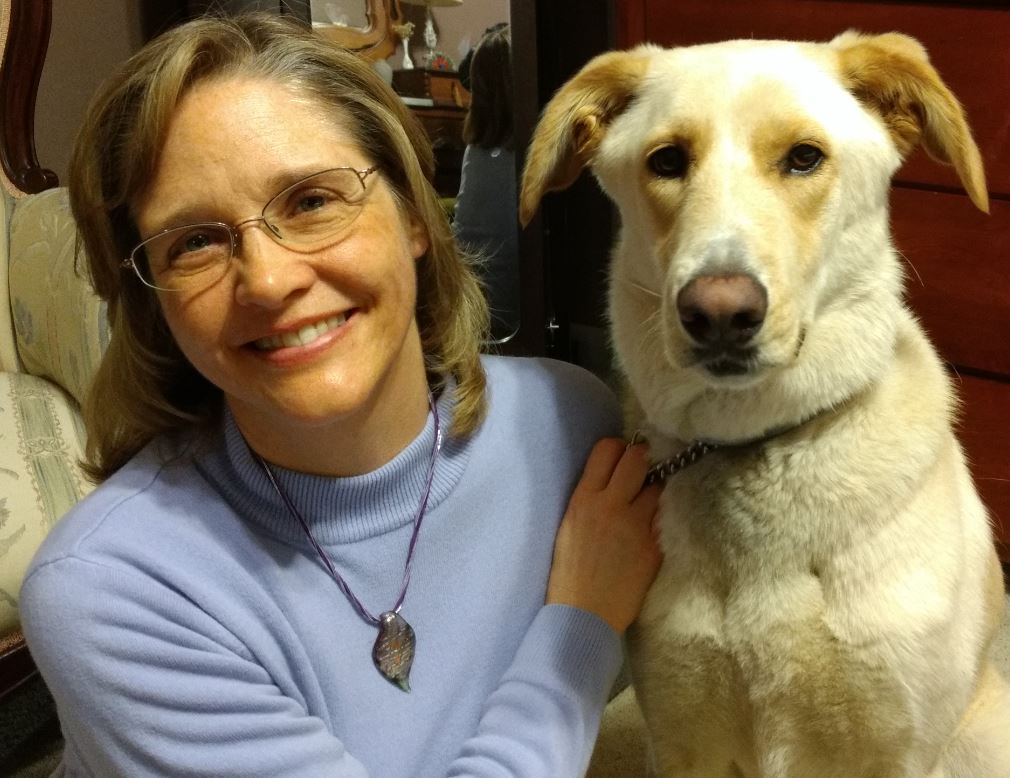
We are happy to introduce you to our new biology teacher, Sarah McCollum. Sarah has a bachelor’s in Biology from Stephens College and a Master’s in Science Education from the University of Iowa. Earlier in her life, she taught high school science for a number of years and is now excited to return to the classroom at Covenant. Sarah is married to Kevin and they have two children, including Rachel who joined us as a 9th grader this past fall.
When did you decide to become a teacher?
I fell in love with science in middle school, and after taking biology as a freshman in high school I knew I had found my niche! My original plan was to work in biological research. However, during my junior and senior years of college, I realized that I was not satisfied hanging out with test tubes and micropipettes all day long! After praying, I felt that God was leading me towards teaching – that would allow me to combine my love of people with my love of science. There was only one problem with my plan – I was a senior due to graduate with a degree in biology, but no teaching training! I decided to continue in school and earn my Master’s Degree and my teaching certificate at the same time. After teaching for 6 years, my son was born and I left the teaching job to be at home with my son, and a few years later, my daughter.
Why did you decide you wanted to start teaching again?
Once both children were in grade school, I returned to teaching as a substitute, which I’ve done for the last 6 years. During the past year, I began to feel restless with the substitute teaching – I missed being able to design lessons and build long-term connections with students. In the fall, I tutored a student in biology and realized that I was just as passionate about biology as I was in the beginning! I was thrilled when Covenant started discussing with me the possibility of teaching biology as a part-time job.
What are some of the things you enjoy most about teaching?
I love teaching biology because it is the study of the living things that God created. Biology is intricate, beautiful and fun, and helps students understand how the world around them works! I believe the most critical part of teaching biology is to provide a solid and well-developed foundation that can be built upon in any future biological field students choose to follow.
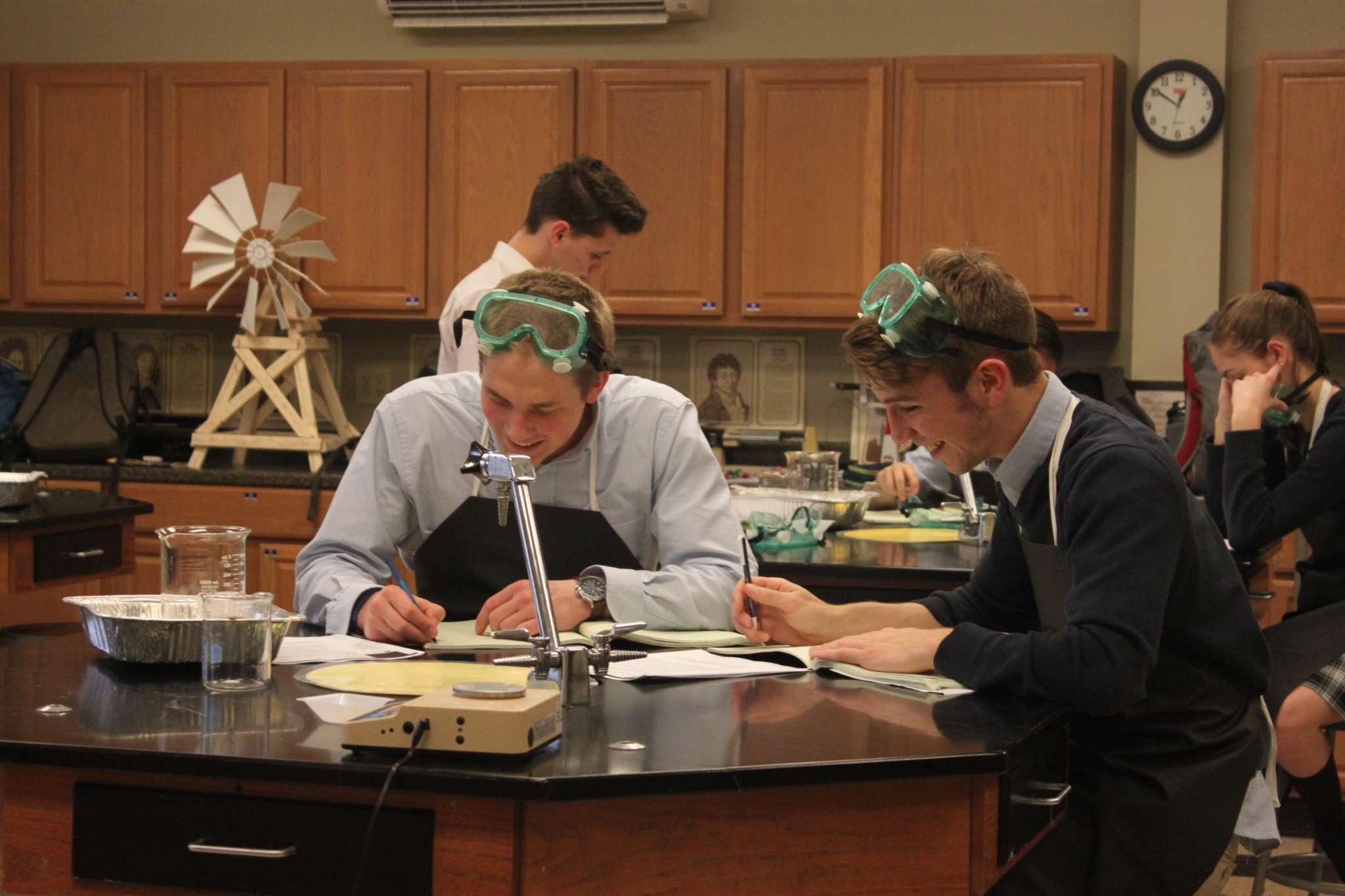
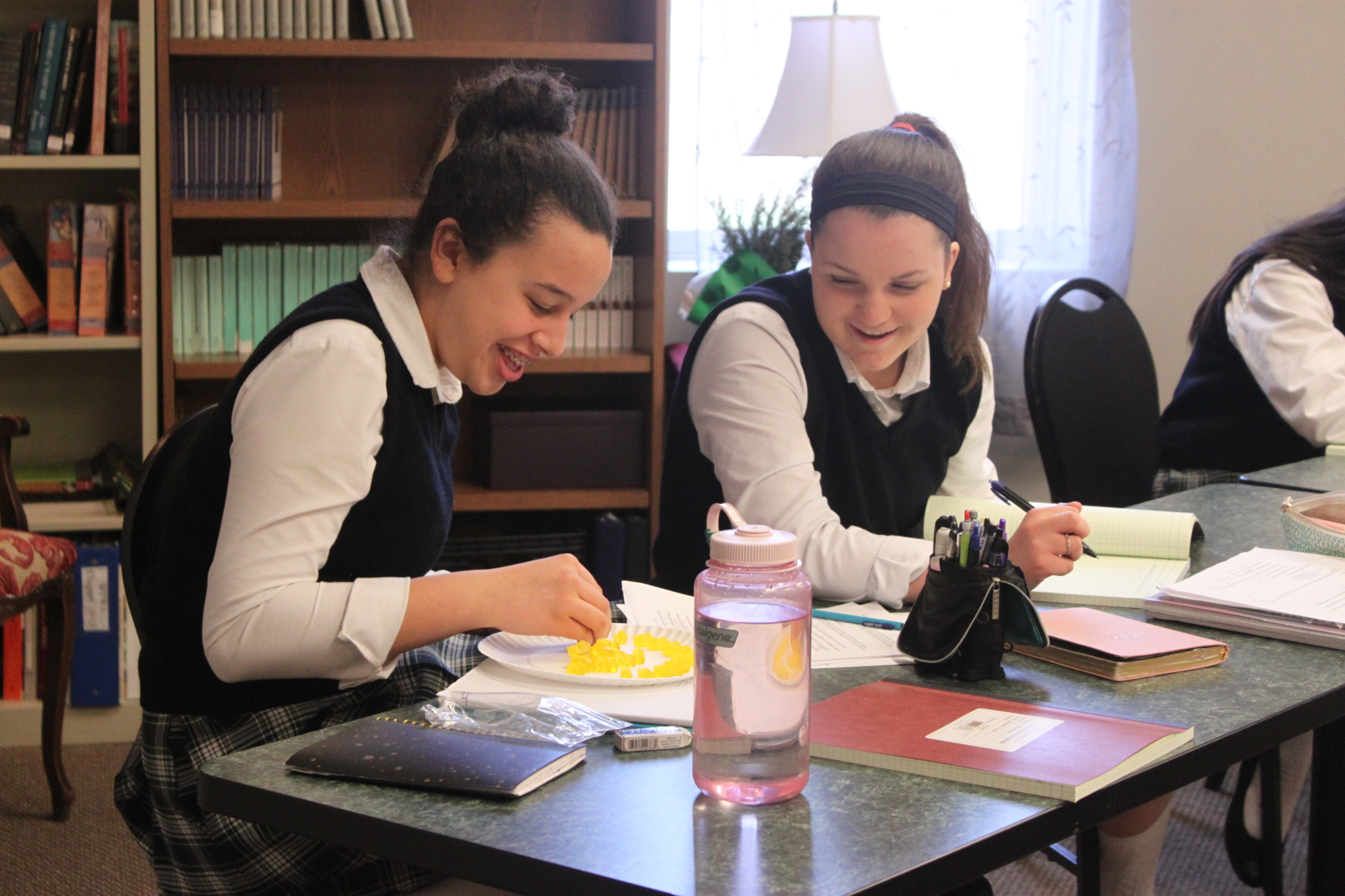
Some of Mrs. McCollum’s students participating in a genetics activity.
Apart from teaching, what are other things that you enjoy doing?
Besides my love of science, I love studying and teaching the Bible, reading classical whodunit mysteries, embroidery, camping, spending time with my family and taking long walks with my dog.
What have you enjoyed about our school since your daughter started this fall?
I have enjoyed getting to know the people at Covenant this year. The school is very welcoming and has made Rachel and me feel at home and a part of the Covenant community very quickly.
It’s great to have you here, Sarah! We look forward to having you teach biology to our students next year.
Covenant Christian Academy
1982 Locust Lane
Harrisburg, PA 17109
Office Phone: 717-540-9885
Office Fax: 717-540-7176
